
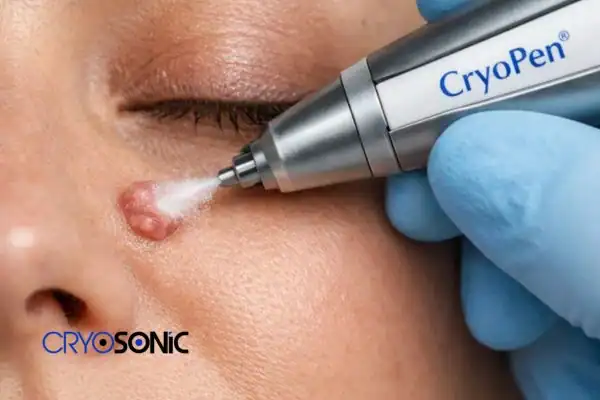
Can a Skin Lesion Come Back After CryoPen Treatment?
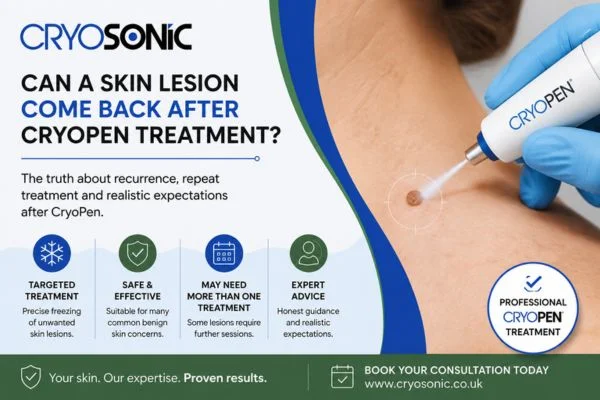
You’ve had an unwanted skin tag, wart, age spot or other suitable lesion treated — but one question may still be on your mind:
Can it come back?
It’s a perfectly reasonable question.
When people book skin lesion removal, they understandably hope that once the lesion has been treated, that’s the end of it.
However, skin doesn’t always behave quite that simply.
Some lesions may respond to one treatment and not return in the same place. Others can require more than one treatment, while certain types of lesions may recur or new ones may develop elsewhere.
At Cryosonic, it’s important to explain what’s realistic before treatment rather than promising that every lesion will disappear permanently after one appointment.
Here’s what you need to know.
How Does CryoPen Remove a Skin Lesion?
CryoPen is a precision cryotherapy device that applies an intensely cold, targeted jet to suitable unwanted tissue.
The freezing process damages the targeted cells. After treatment, the area goes through a natural healing process, and the treated tissue can gradually dry, crust, or shed away.
Because the application is highly targeted, treatment can be concentrated on the lesion while limiting exposure of the surrounding skin.
Cryosonic currently uses CryoPen for a range of suitable lesions, including skin tags, warts, verrucae, age spots and other benign skin concerns.
But importantly:
Different lesions behave differently.
That means the likelihood of needing another treatment — or experiencing recurrence — depends partly on what was treated in the first place.
Does CryoPen Permanently Remove Skin Lesions?
This is where we need to distinguish between successfully treating a particular lesion and guaranteeing you’ll never develop another lesion.
They aren’t the same thing.
Cryotherapy can successfully destroy targeted tissue, but nobody can responsibly promise that you will never develop another skin tag, wart, age spot or other lesion.
Your skin continues to change throughout your life.
Age, sun exposure, genetics, viruses, friction and other factors can all influence the development of different skin concerns.
So even if one lesion has been successfully treated, you could potentially develop a new lesion somewhere else.
Can a Skin Tag Grow Back After CryoPen?
Skin tags are small, usually harmless growths. They appear where skin rubs against skin or clothing.
When a skin tag is successfully treated, that particular growth may disappear.
However, your tendency to develop skin tags may not change.
You may therefore notice new skin tags developing nearby or elsewhere on your body over time.
This doesn’t automatically mean your original CryoPen treatment has “failed”.
It may simply be a new lesion.
If you’re unsure whether you’re looking at the original lesion returning or a new growth, it is sensible to have the area assessed.
Can Warts Come Back After Cryotherapy?
Warts are slightly different; they are associated with infection by certain types of HPV.
That means recurrence can occur.
Sometimes a wart also requires more than one treatment before it fully resolves.
This is one reason why we avoid telling clients that every wart will disappear following a single CryoPen session.
Some respond relatively quickly.
Others can be stubborn.
Cryosonic already discusses this in its guidance on stubborn verrucae and why some lesions may need multiple treatments.
Can Verrucae Come Back?
Yes, verrucae can recur.
A verruca is essentially a wart occurring on the foot and is also associated with HPV.
Some can be particularly persistent.
Their location doesn’t help either.
Because they’re commonly found on weight-bearing areas of the feet, they can become flattened or grow inward under pressure.
A verruca that hasn’t completely responded to treatment may therefore require further assessment or another treatment session.
And because HPV is contagious, developing another verruca later is also possible.
Can Age Spots Come Back After CryoPen?
An individual’s age spot may respond well to cryotherapy.
However, treating an existing area of pigmentation doesn’t stop your skin from experiencing future sun exposure or age-related changes.
That means new pigmentation can appear.
This is particularly important if you’ve accumulated significant sun exposure over many years.
Why Might a Lesion Need More Than One CryoPen Treatment?
Needing another treatment doesn’t necessarily mean something has gone wrong.
There are many variables involved.
These can include:
- type of lesion
- thickness
- depth
- size
- location
- individual’s response to treatment
- way the area heals
A small superficial lesion may behave very differently from a thick, established wart.
At Cryosonic, we already advise clients that although some lesions may respond following one treatment, others can require a follow-up session.
That’s why treatment should be tailored to the individual rather than promising identical results for everybody.
What If My Lesion Is Still There After CryoPen?
First, give the area time to heal.
Immediately after treatment, you shouldn’t expect the skin to look as though nothing happened.
Cryotherapy triggers a healing process.
Depending on the lesion and individual response, you might experience:
- redness
- mild swelling
- tenderness
- blistering
- crusting or scabbing
- temporary colour changes
The treated tissue may then gradually shed as the skin heals.
Cryosonic’s existing aftercare guidance explains that the process can take several weeks and that some lesions require further treatment.
Don’t pick or deliberately remove a scab to speed things up.
Follow the aftercare advice you’ve been given and allow your skin to heal naturally.
When Should I Contact Cryosonic Again?
If the area has healed but the lesion is still clearly present, contact us.
We can advise whether:
more healing time is required,
a further treatment may be appropriate,
or
the lesion should be assessed differently.
This is one reason follow-up advice is important.
Skin lesion removal shouldn’t simply be:
freeze it → forget about it.
The skin’s response matters too.
What If a Lesion Grows Back Differently?
This is particularly important.
If something you believe is a previously treated lesion returns, changes considerably, grows, bleeds, becomes persistently sore or starts looking unusual, don’t simply assume it needs another cosmetic treatment.
Seek appropriate medical assessment.
Similarly, if you have a skin lesion you’re unsure about in the first place, you may need an appropriate diagnosis or medical opinion before considering cosmetic removal.
CryoPen isn’t a substitute for investigating a suspicious or undiagnosed skin lesion.
Why We Don’t Promise “Permanent Removal”
You’ll sometimes see cosmetic treatments advertised online using phrases such as:
PERMANENT REMOVAL
or
ONE TREATMENT GUARANTEED.
At Cryosonic, we’d rather give you realistic expectations.
Some lesions can respond very successfully to treatment.
Some need additional treatment.
Some can recur.
And you can develop entirely new lesions in the future.
That’s how skin works.
A responsible consultation should therefore consider what the lesion is, whether it is appropriate for cosmetic treatment and what you can realistically expect afterwards.
Can I Have Several Recurring Lesions Treated Together?
Potentially, yes.
If you have several suitable lesions, it may be possible to treat more than one during the same appointment.
The number you can have treated depends on factors such as their type, size, location, and your individual circumstances.
Cryosonic already offers guidance on treating multiple suitable lesions within one session.
If you’ve noticed several skin tags, warts or other unwanted lesions, speak to the team rather than assuming you’ll need a separate appointment for every one.
How Can I Reduce the Chance of Skin Lesions Returning?
There isn’t one method that prevents every type of skin lesion because they have different causes.
But looking after your skin generally remains worthwhile.
With warts and verrucae, remember that HPV can spread between people and to other areas of the body.
And most importantly:
Don’t attempt to cut, burn or freeze an unidentified lesion yourself.
If you’re unsure what something is, get appropriate professional advice.
Can a Skin Lesion Come Back After CryoPen? FAQs
Can a skin tag grow back after CryoPen?
A successfully treated skin tag may not return in the same place, but people who are prone to skin tags can develop new ones elsewhere.
Can a wart return after CryoPen treatment?
Yes. Warts are associated with HPV and can sometimes recur. Some warts also require more than one treatment.
Why hasn’t my lesion disappeared after one CryoPen session?
Different lesions respond differently. Size, depth, thickness, type and location can all affect the response. Some lesions require further treatment.
Does needing a second CryoPen treatment mean the first one failed?
Not necessarily. Some lesions require more than one treatment to achieve the desired response.
How long should I wait before deciding CryoPen hasn’t worked?
Allow the treated area to complete its expected healing process and follow the aftercare advice you’ve been given. If you’re concerned about the progress, contact your treatment provider rather than attempting to treat the area yourself.
Can CryoPen stop new skin tags appearing?
No treatment can guarantee that you will never develop another skin tag. Successfully treating an existing skin tag doesn’t necessarily change your tendency to develop them.
Can age spots return after treatment?
The treated pigmentation may respond to CryoPen, but further pigmentation can develop as the skin continues to age and experience UV exposure.
Can CryoPen prevent verrucae from coming back?
CryoPen can treat suitable verrucae, but because verrucae are associated with HPV, recurrence or new verrucae are possible.
Should I have a lesion treated again if it comes back?
Don’t automatically retreat it. If a lesion returns or changes, have it reassessed first. Any lesion that appears unusual, changes significantly, bleeds or causes concern should receive appropriate medical assessment.
Can several lesions be retreated during the same appointment?
Potentially. This depends on the lesions, their locations and your individual circumstances. Your Cryosonic practitioner can advise you following assessment.
Concerned About an Unwanted Skin Lesion?
Finding that a lesion hasn’t completely disappeared — or noticing another one — can be frustrating.
But it doesn’t necessarily mean anything has gone wrong.
The important thing is to identify what you’re dealing with and choose an appropriate treatment plan rather than repeatedly treating the skin yourself.
At Cryosonic, we provide CryoPen treatment for a range of suitable unwanted skin lesions, with treatment options available across the UK.
Have a lesion you’d like assessed?
Speak to the Cryosonic team to discuss whether CryoPen may be suitable for you.